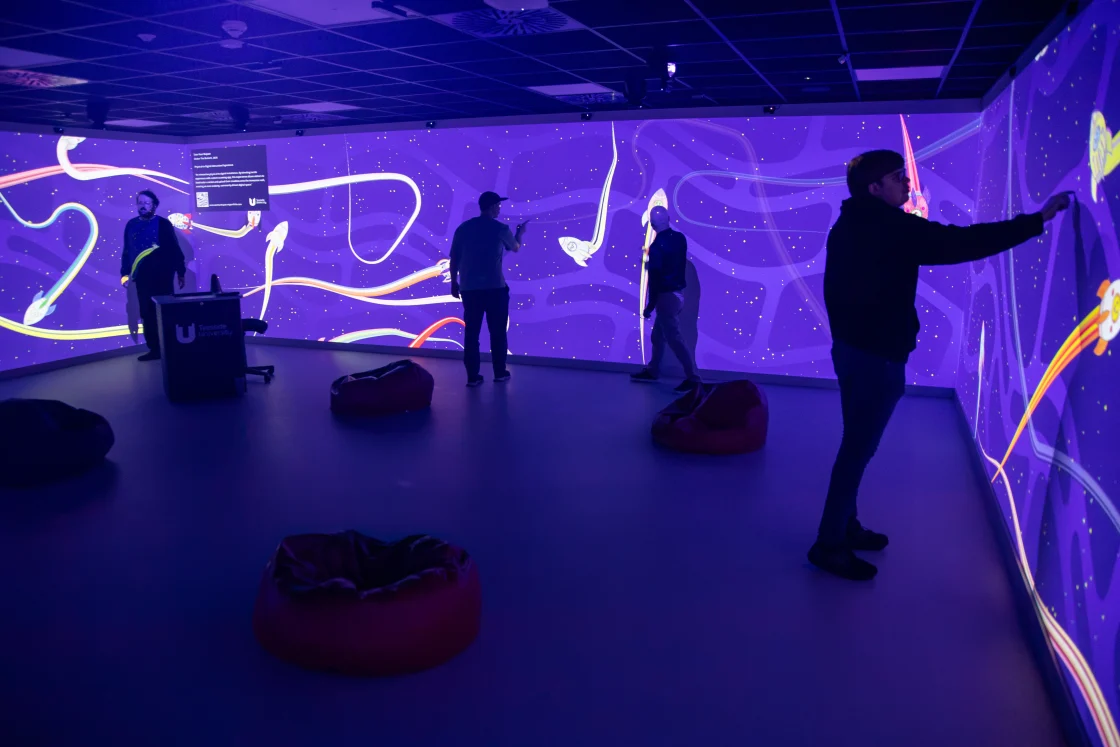

At TUCAN Studio, we’ve been spending time exploring the capabilities of Teesside Universities virtual production studio and putting the technology through its paces in a series of practical tests with the technical team.
Our studio features a large-scale LED wall, an integrated Vicon motion capture system, and a dedicated Unreal Engine 5 setup. While each of these technologies is powerful in its own right, the real value comes from understanding how they work together in a live production environment.
Hands-On Testing
Rather than focusing on a specific project outcome, these sessions have been about experimentation and learning. The team has been testing different virtual production workflows, refining tracking accuracy, and understanding how virtual and physical elements can be combined more effectively on set.
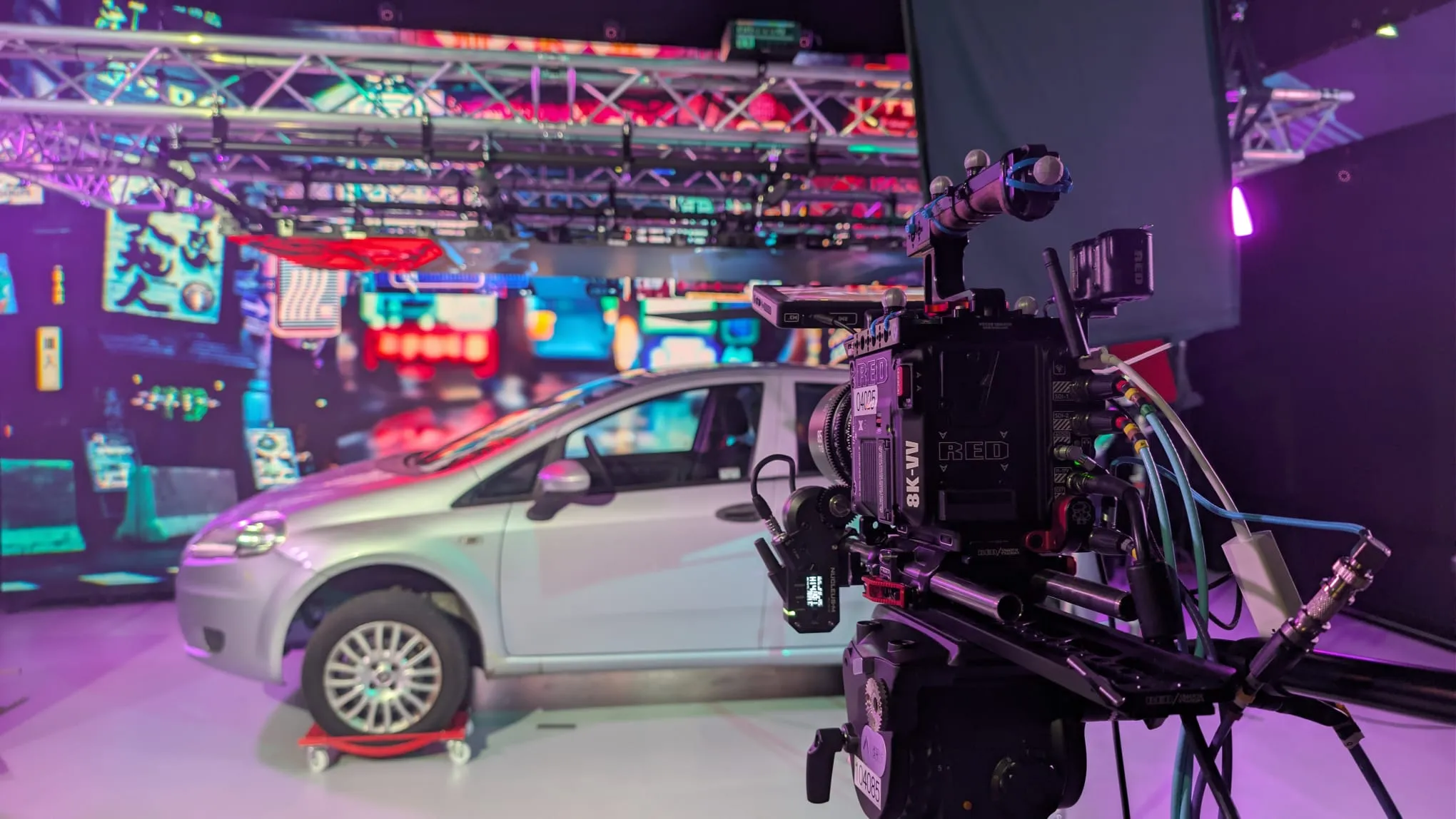
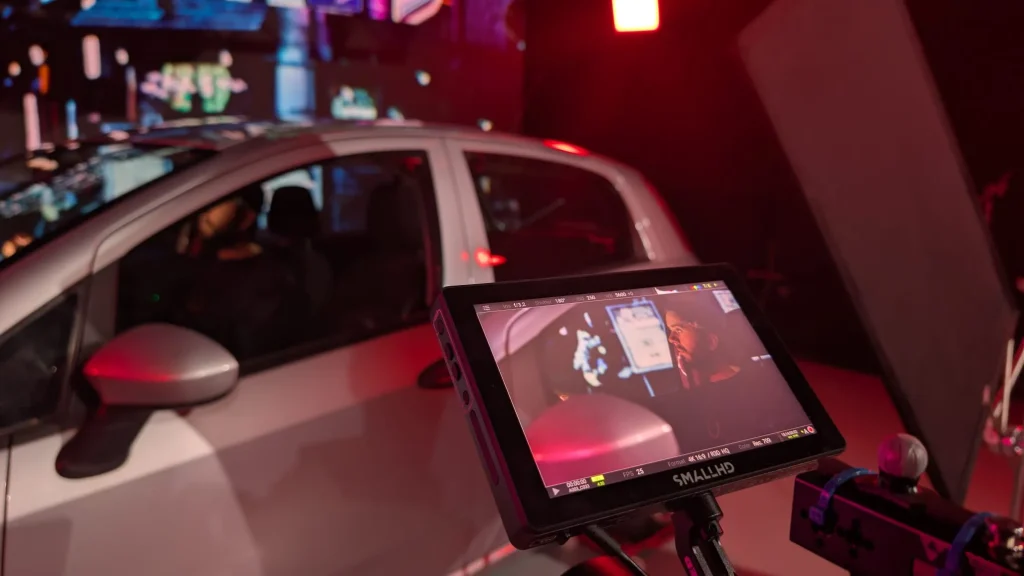
One recent test involved bringing a full-sized car into the studio to capture a series of shots against the LED volume. This gave us an opportunity to explore how reflections, perspective, camera movement and virtual backgrounds interact in a controlled environment.
Working with Motion Capture and Unreal Engine 5
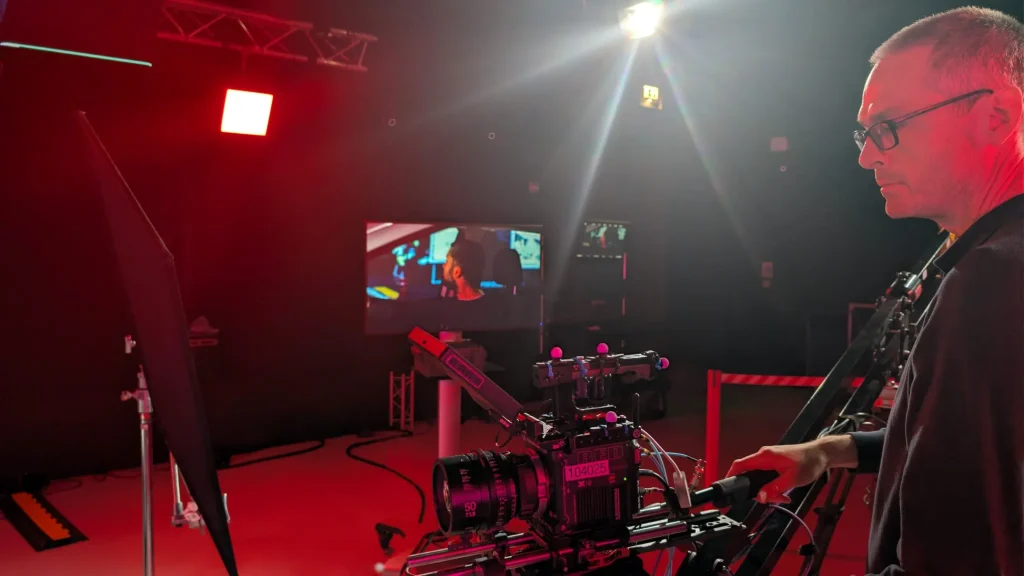
The integrated Vicon motion capture system allows real-time tracking of movement, providing accurate data that can be fed directly into Unreal Engine 5. This opens up a wide range of creative and technical possibilities, from virtual environments and digital characters to camera tracking and live visualisation.
Using UE5, we have been experimenting with environments, scene setup and real-time rendering, helping us better understand the practical considerations involved in virtual production workflows.
Refining Focus and Camera Techniques
One area of particular interest has been camera focus and lens behaviour within the virtual production setup. Achieving a convincing blend between physical and virtual elements relies on precise camera calibration and careful control of focus throughout a shot.
Testing different shooting scenarios has helped the team identify techniques that improve realism while maintaining flexibility during production.
Learning Through Experimentation
These sessions have been a valuable opportunity to explore the studio’s capabilities, identify challenges and develop practical knowledge of the technology. Every test provides new insights into virtual production workflows, from tracking and rendering through to lighting and cinematography.
As we continue experimenting, the focus remains on learning what works, refining processes and understanding how these emerging technologies can best support creative production.
No related posts.