Case Study: Virtual reality-based bioreactor digital twin

Virtual reality-based bioreactor digital twin for operator training

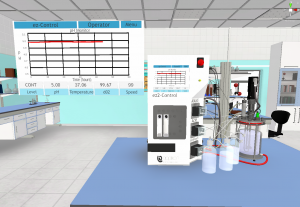
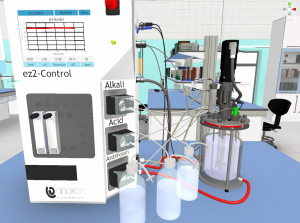
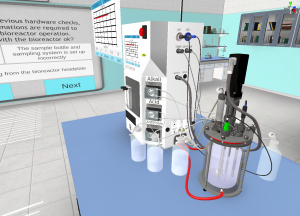
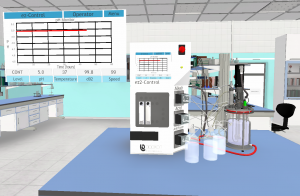
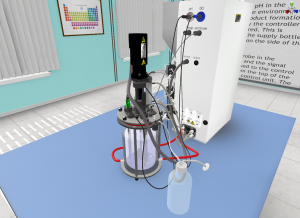
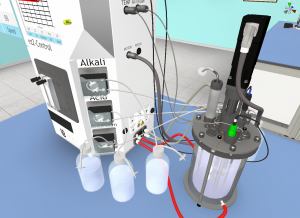
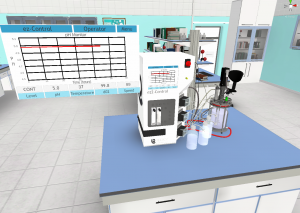
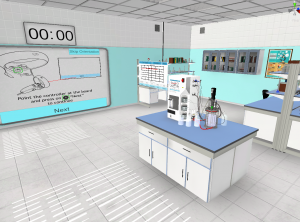
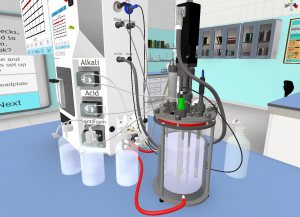
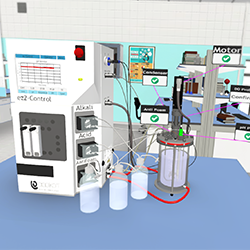
This project introduces a virtual reality training system designed to help people learn how to set up and run bioreactors without the cost or risk of working on real equipment. The system is built as a full digital twin of a 20 litre stainless steel bioreactor, with every valve, probe, and control panel ready to explore and interact with. Trainees use VR headsets to move around the reactor, learn each part, and practise real procedures such as steam sterilisation and pH probe calibration.
 
The trainer goes beyond simple walkthroughs. It includes rare events such as pressure spikes, along with a live penicillin production model that reacts to the user’s choices in real time. This lets learners see how changes in aeration, temperature, or feed rate affect the process, and it also allows them to diagnose faults like failing controllers or empty reagent bottles.

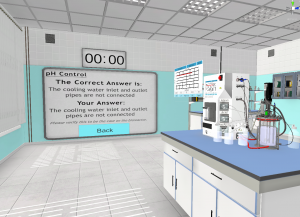
To support teaching, the system logs performance in the background. It tracks errors, timings, and interaction patterns and presents them in a clear dashboard so instructors can follow progress. A smaller game for glass bioreactors is also included to help early stage learners build confidence in spotting common setup mistakes. 
 
The VR trainer has already been used with university engineering and bioscience students, most of whom were new to VR. Feedback has been positive, and the sessions helped build practical understanding before learners moved into real lab environments. Future plans focus on adding more bioreactor types and refining the simulated processes based on feedback from industry users
 
See the attached Research paper here: